
Petroleum Engineer Resume Example
What does a Petroleum Engineer do?
A Petroleum Engineer designs and develops methods for extracting oil and gas from underground reserves. They analyze data, create drilling plans, and optimize production processes using specialized software and technology. Typically, they work in collaboration with geologists, rig operators, and project managers in both office and field environments.
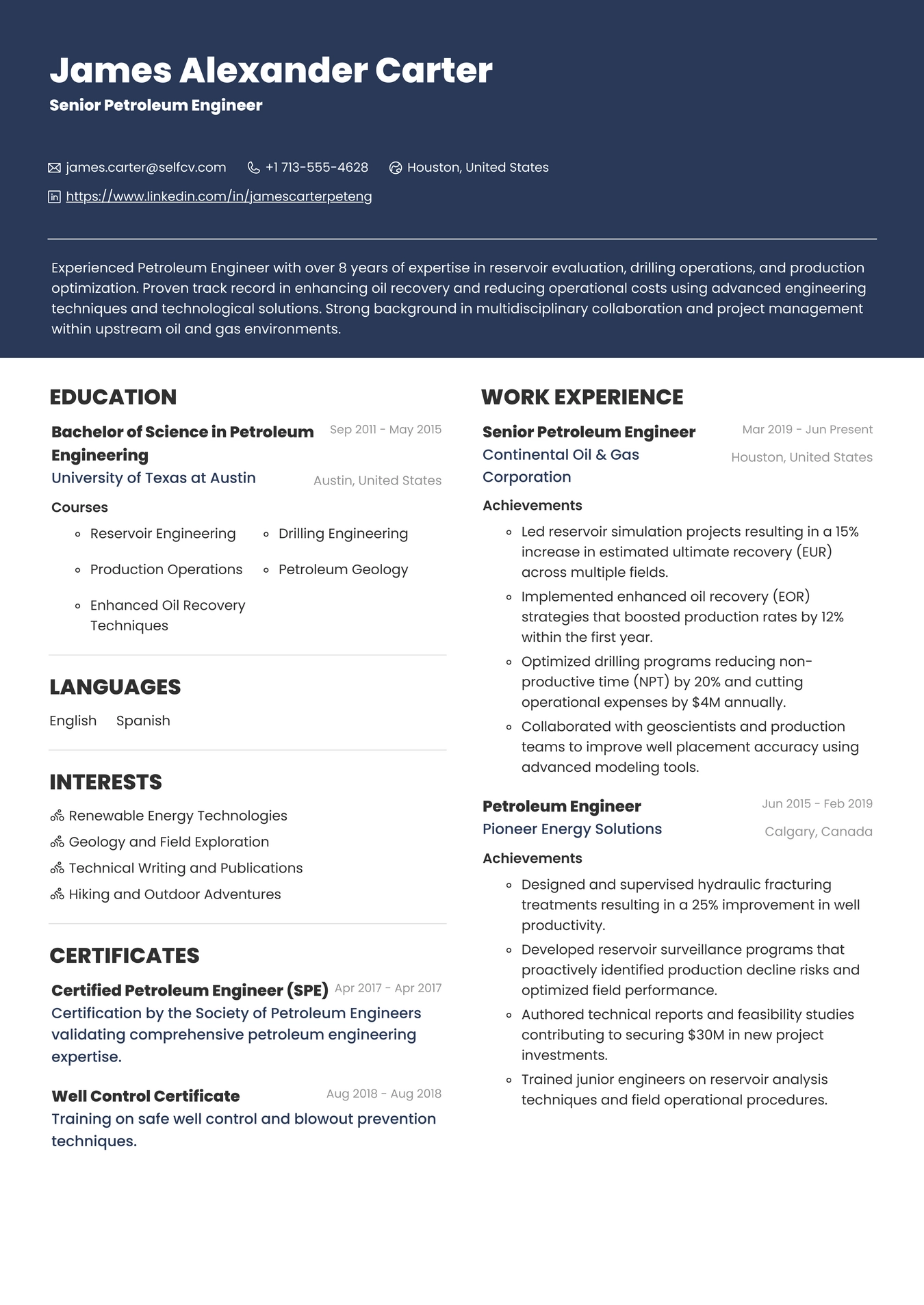
What are some responsibilities of a Petroleum Engineer?
Petroleum Engineers evaluate reservoir performance and design efficient extraction techniques. They troubleshoot operational issues, ensure safety and environmental compliance, and coordinate with multidisciplinary teams to optimize production. Their decisions directly impact cost efficiency and resource recovery, contributing significantly to company goals.
Petroleum Engineer Skills for a Resume
Key skills include strong analytical thinking, effective communication, and teamwork, along with industry-specific technical expertise. Proficiency in engineering software, problem-solving abilities, and understanding of regulatory standards are critical for success.
- Analytical Thinking
- Effective Communication
- Team Collaboration
- Problem Solving
- Adaptability
- Detail Orientation
- Reservoir Engineering
- Drilling Engineering
- Production Optimization
- Technical proficiency in industry software (e.g., PETREL, Eclipse)
- Data Analysis and Reporting
- Project Management
- Regulations and Compliance Knowledge
- Troubleshooting Techniques
- Documentation and Workflow Optimization
- Use of Collaboration and Communication Platforms
Example Resume for Petroleum Engineer
Common Mistakes to Avoid When Writing a Petroleum Engineer Resume
Common mistakes include listing outdated software skills, using vague descriptions of duties, neglecting measurable accomplishments, not tailoring the resume to specific job requirements, and omitting relevant certifications such as Professional Engineer (PE) licensure.
Key Takeaways for a Petroleum Engineer Resume
A strong Petroleum Engineer resume emphasizes relevant hands-on experience and quantifiable results. It should include up-to-date certifications and be carefully tailored to match the job description while highlighting both technical skills and collaboration abilities.
- Highlight hands-on experience relevant to the Petroleum Engineer role.
- Use measurable results to demonstrate achievements and impact.
- Add relevant certifications or completed courses related to Petroleum Engineer.
- Tailor each resume to the specific job posting.
- Balance technical expertise with communication and teamwork skills.
More than a resume builder
Get startedFind the template that’s right for you
No need to build anything from scratch. Using our templates or upload feature, you’ll get started easily and have a powerful resume in a few clicks.


Check Your Resume with ATS
Make sure your resume passes Applicant Tracking Systems before recruiters see it.
- 📄 Upload your resume and get instant ATS feedback
- 🎯 Improve keyword matching for your target job
- ⚡ Boost your chances of getting shortlisted

