
Geotechnical Engineering Resume Example
What does a Geotechnical Engineer do?
A Geotechnical Engineer analyzes soil, rock, and underground water conditions to inform construction and design decisions. They conduct field investigations and laboratory testing, interpret data using specialized software, and collaborate with civil engineers, architects, and construction teams. Their work environment often includes offices, laboratories, and construction sites.
What are some responsibilities of a Geotechnical Engineer?
Core responsibilities include performing soil and site analysis, designing foundation systems, and assessing risks related to soil stability and groundwater. They make critical decisions about material suitability and construction methods, troubleshoot geotechnical challenges, and prepare detailed technical reports. Their work ensures structural safety and supports project feasibility.
Geotechnical Engineering Skills for a Resume
Relevant skills include analytical thinking, communication, and project management, along with expertise in soil mechanics and foundation design. Proficiency in geotechnical software and data interpretation is essential, as is knowledge of industry regulations.
- Analytical Thinking
- Effective Communication
- Attention to Detail
- Problem-Solving
- Collaboration
- Time Management
- Soil Mechanics and Testing
- Foundation Design
- Site Investigation Techniques
- Geotechnical Software Proficiency (e.g., PLAXIS, GeoStudio)
- Data Analysis and Reporting
- Project Management and Task Prioritization
- Regulations and Compliance Knowledge
- Problem-Solving and Troubleshooting Techniques
- Report Writing and Documentation
- Use of Collaboration Platforms (e.g., MS Teams, Slack)
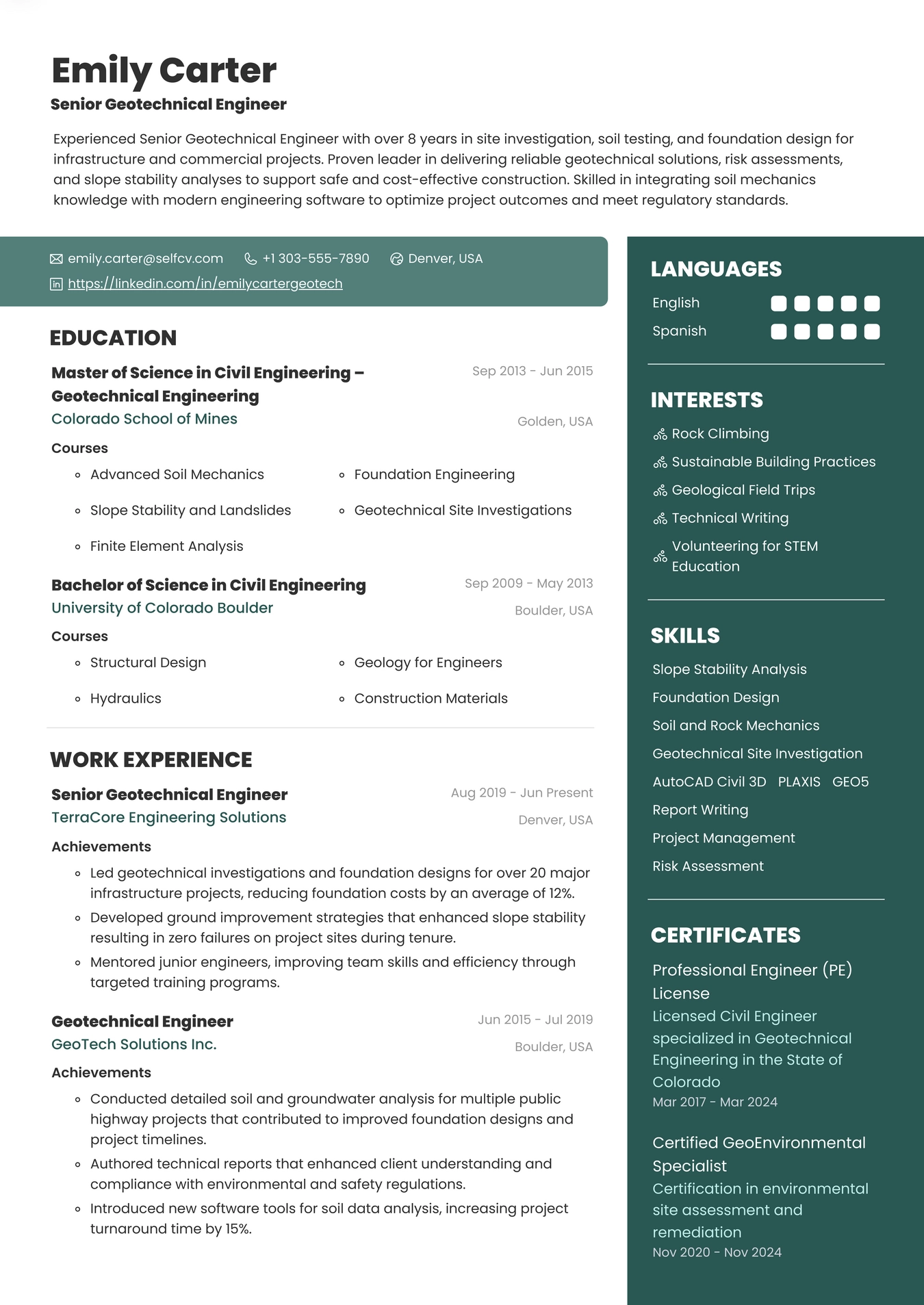
Example Resume for Geotechnical Engineering
Common Mistakes to Avoid When Writing a Geotechnical Engineer Resume
Candidates often list outdated or irrelevant skills, use vague descriptions without clear accomplishments, and fail to quantify achievements. Another mistake is not tailoring the resume to specific job requirements or omitting key certifications like PE licensure.
Key Takeaways for a Geotechnical Engineer Resume
A strong resume focuses on relevant hands-on experience and measurable outcomes that demonstrate expertise. Including certifications and customizing the resume to match the job posting enhances a candidate's competitiveness.
- Highlight hands-on experience relevant to the Geotechnical Engineering role.
- Use measurable results to demonstrate achievements and impact.
- Add relevant certifications or completed courses related to Geotechnical Engineering.
- Tailor each resume to the specific job posting.
- Balance technical expertise with communication and teamwork skills.
More than a resume builder
Get startedFind the template that’s right for you
No need to build anything from scratch. Using our templates or upload feature, you’ll get started easily and have a powerful resume in a few clicks.


Check Your Resume with ATS
Make sure your resume passes Applicant Tracking Systems before recruiters see it.
- 📄 Upload your resume and get instant ATS feedback
- 🎯 Improve keyword matching for your target job
- ⚡ Boost your chances of getting shortlisted

