
Fraud Investigator Resume Example
What does a Fraud Investigator do?
A Fraud Investigator conducts detailed examinations of suspicious financial activities to detect and prevent fraud. They analyze transaction records, interview involved parties, and work closely with law enforcement and compliance teams. Their typical work environment includes offices, relying on specialized investigative software and databases to support their efforts.
What are some responsibilities of a Fraud Investigator?
A Fraud Investigator identifies and investigates fraudulent activities through data analysis and evidence collection. They make decisions on potential fraud cases and develop strategies to mitigate risks. They also prepare detailed reports and collaborate with legal and compliance departments to ensure proper handling of cases, which supports the organization's fraud prevention programs.
Fraud Investigator Skills for a Resume
Key skills include analytical thinking, attention to detail, effective communication, and knowledge of fraud detection techniques. Proficiency in investigative software, data analysis, and understanding of legal regulations is essential. Problem-solving, documentation expertise, and teamwork are also critical for success.
- Analytical Thinking
- Attention to Detail
- Communication Skills
- Critical Thinking
- Integrity
- Team Collaboration
- Fraud Detection and Investigation Techniques
- Financial Data Analysis
- Interviewing and Evidence Collection
- Specialized Investigation Software (e.g., Case Management Tools)
- Data Analysis and Reporting
- Project Management and Task Prioritization
- Regulatory Compliance Knowledge (e.g., AML, KYC)
- Problem-solving and Troubleshooting Techniques
- Documentation and Workflow Optimization
- Use of Collaboration and Communication Platforms
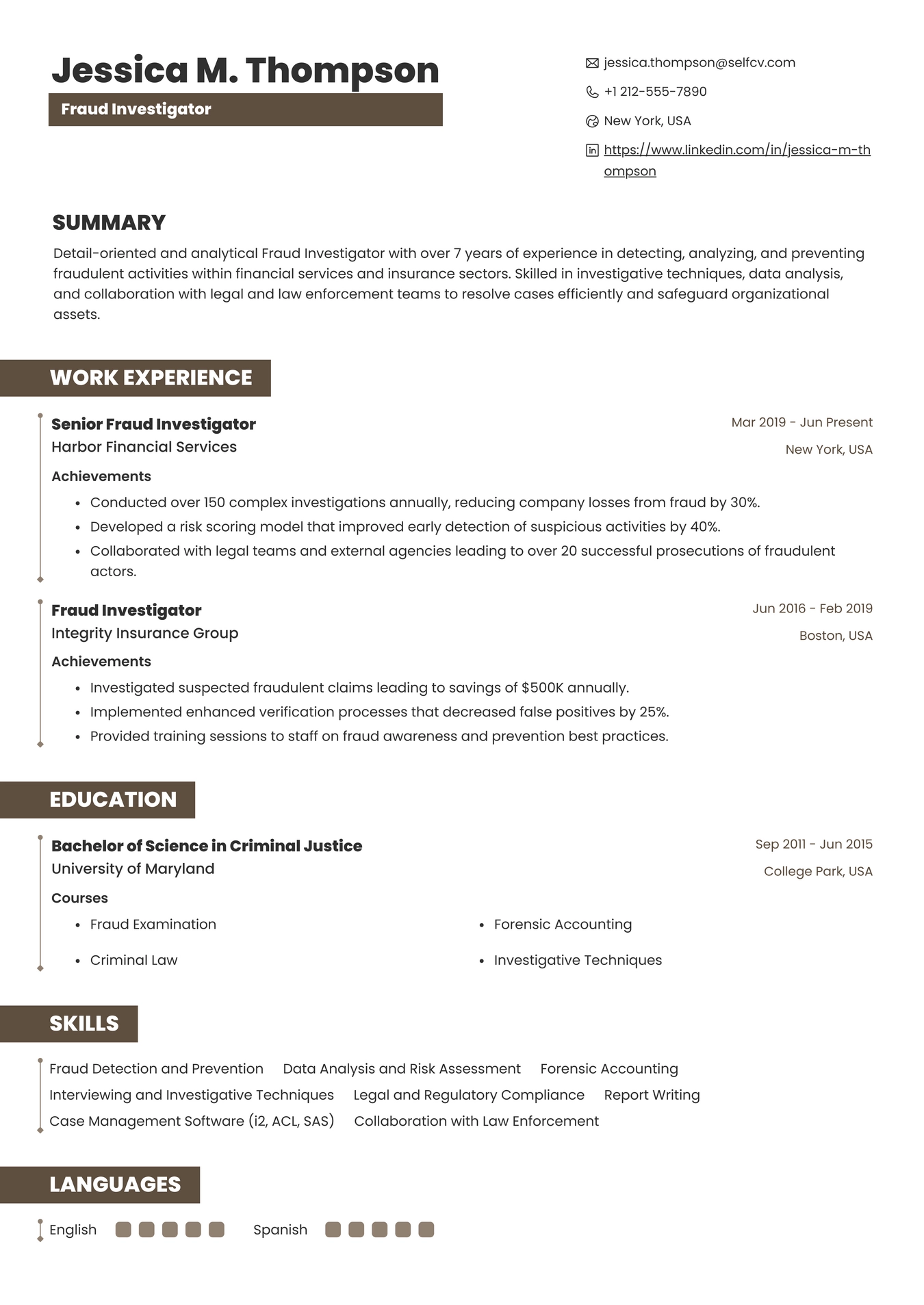
Example Resume for Fraud Investigator
Common Mistakes to Avoid When Writing a Fraud Investigator Resume
Candidates often list outdated skills or use vague descriptions that fail to highlight their investigative abilities. Many neglect to include measurable achievements, such as fraud amounts recovered or cases resolved. Poorly tailored resumes that do not match job requirements and omitting relevant certifications reduce the effectiveness of the application.
Key Takeaways for a Fraud Investigator Resume
A strong Fraud Investigator resume clearly demonstrates relevant experience and quantifiable accomplishments. It aligns skills and certifications with the job description, and balances technical expertise with communication and teamwork abilities.
- Highlight hands-on experience relevant to the Fraud Investigator role.
- Use measurable results to demonstrate achievements and impact.
- Add relevant certifications or completed courses related to Fraud Investigator.
- Tailor each resume to the specific job posting.
- Balance technical expertise with communication and teamwork skills.
More than a resume builder
Get startedFind the template that’s right for you
No need to build anything from scratch. Using our templates or upload feature, you’ll get started easily and have a powerful resume in a few clicks.


Check Your Resume with ATS
Make sure your resume passes Applicant Tracking Systems before recruiters see it.
- 📄 Upload your resume and get instant ATS feedback
- 🎯 Improve keyword matching for your target job
- ⚡ Boost your chances of getting shortlisted

